Load cell pedals explained: how they work and whether you need them
Pedals are often the most underrated part of a sim racing setup. Yet a brake fitted with a force sensor, known as a load cell, changes the way you brake. This guide explains how load cell pedals work, what the kilogram figures on the box really mean and which models are available, with prices checked on 6 October 2026.
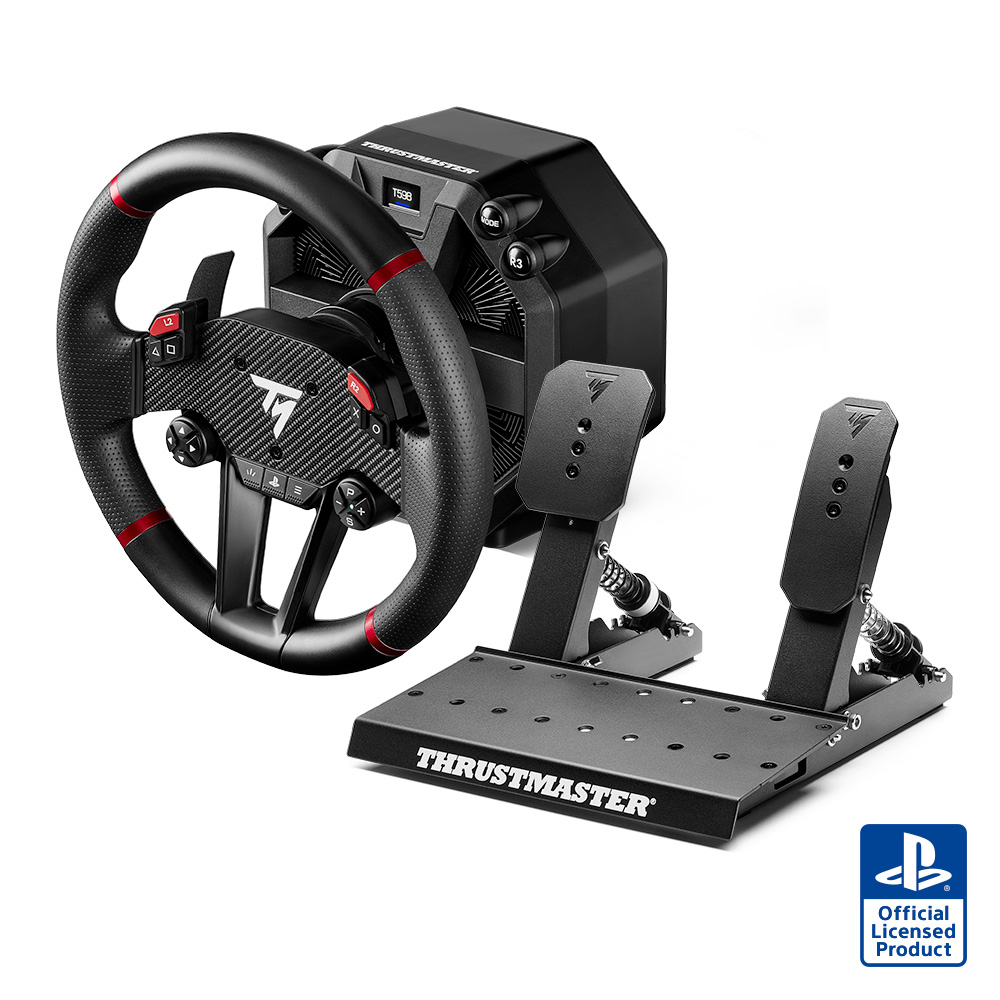
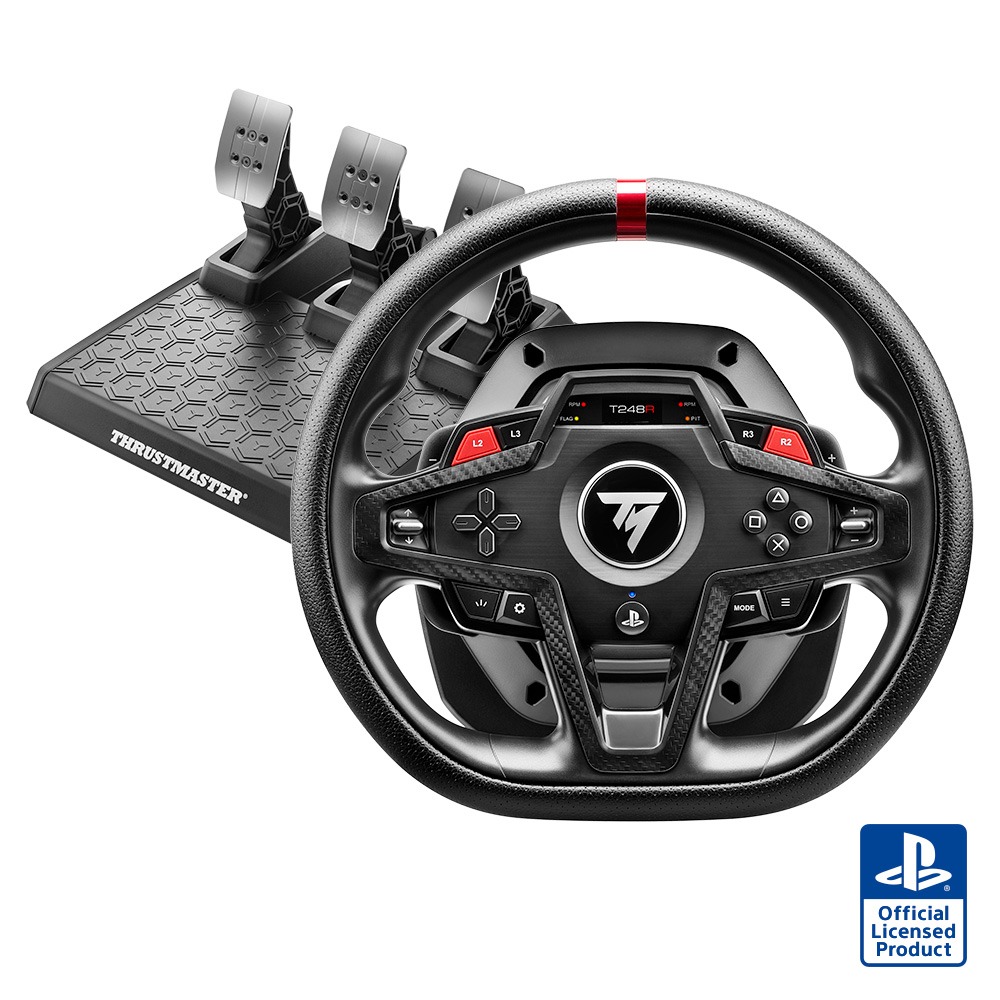 Thrustmaster T248R · Image: manufacturer
Potentiometer, Hall effect, load cell: three ways to measure
A pedal has to turn your input into a signal. Entry-level pedals measure the position of the pedal: the further you push it, the higher the signal. This can be done with a potentiometer or with a contactless magnetic Hall effect sensor, which is less prone to wear.
A load cell works differently. It is a force sensor fitted to the brake pedal. It measures the pressure your foot applies, whatever the travel. The pedal is usually quite firm, with a short stroke.
- Position sensor (potentiometer or Hall effect): the signal depends on pedal travel.
- Force sensor (load cell): the signal depends on the pressure applied.
- Active pedal: a motor generates the pedal resistance and can simulate effects such as ABS.
The pedals included in entry-level bundles often use Hall effect sensors. According to Thrustmaster, that is the case for the T3PM pedals of the Thrustmaster T248 and the Raceline Pedals LTE of the Thrustmaster T598.
Why a load cell brake helps you brake better
In a real car, the brake pedal barely moves once the pads touch the discs. You control braking with the force of your leg. A load cell reproduces that principle, while a position sensor makes you control the travel instead.
Muscle memory retains pressure better than position. It becomes easier to hit the same braking level every lap, then release the pedal progressively as you turn in. For consistency, that matters more than the strength of your wheel base.
This is also why experienced sim racers often recommend upgrading the pedals before anything else. A good brake helps you find time in every braking zone, whatever car or sim you choose.
What do the kg ratings on sim racing pedals mean?
Manufacturers state a figure in kilograms for their load cell brake. It can mean two different things: the rated capacity of the sensor, or the maximum braking force you can actually use.
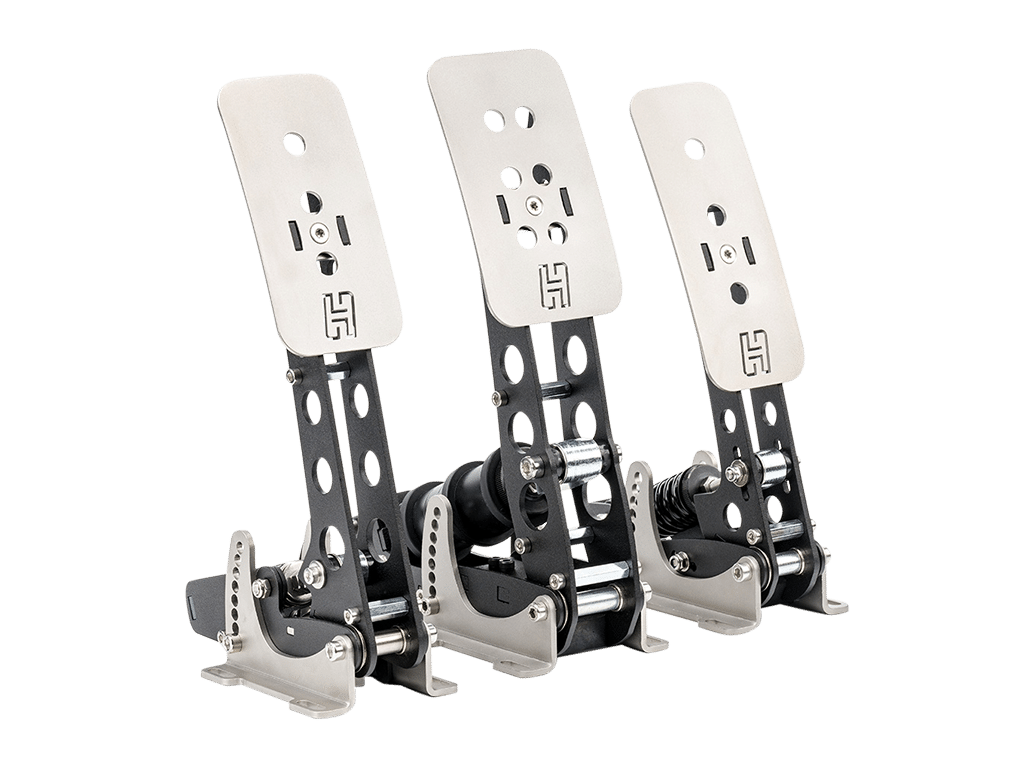
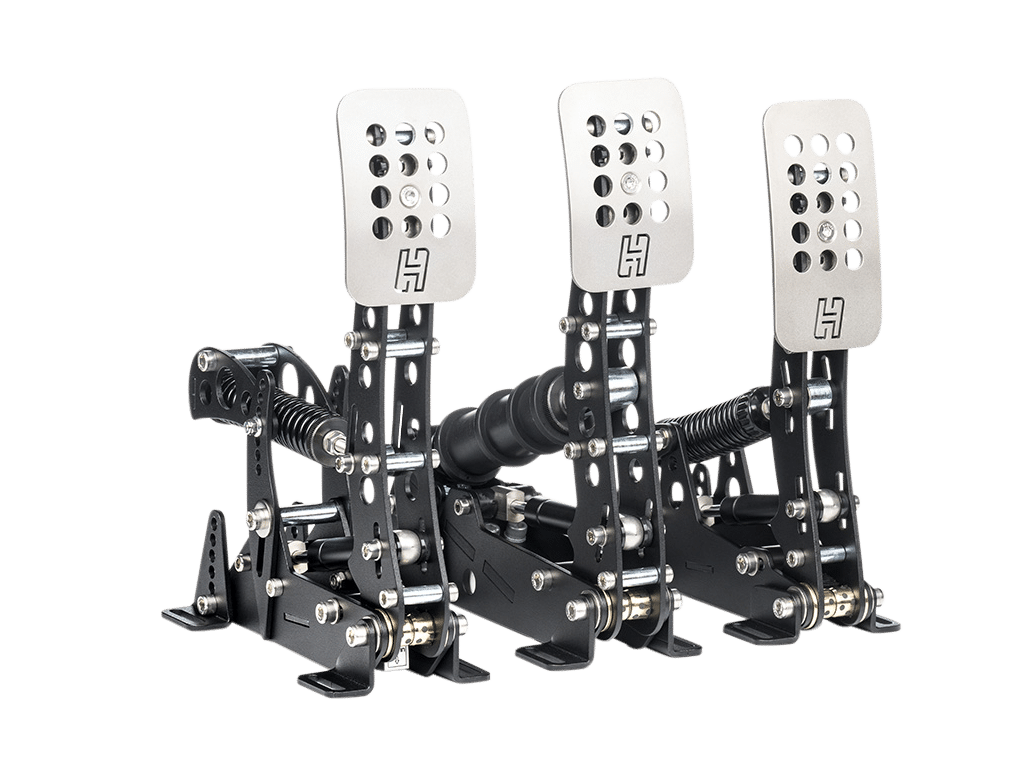
Heusinkveld separates the two clearly. The Sim Pedals Sprint uses a 120 kg sensor for a stated real braking force of up to 65 kg. The Sim Pedals Ultimate+ uses a 200 kg sensor for 140 kg of real braking force. Other brands only publish a single value.
- MOZA CRP2: load cell up to 200 kg, according to MOZA.
- Simagic P1000: 100 kg load cell brake.
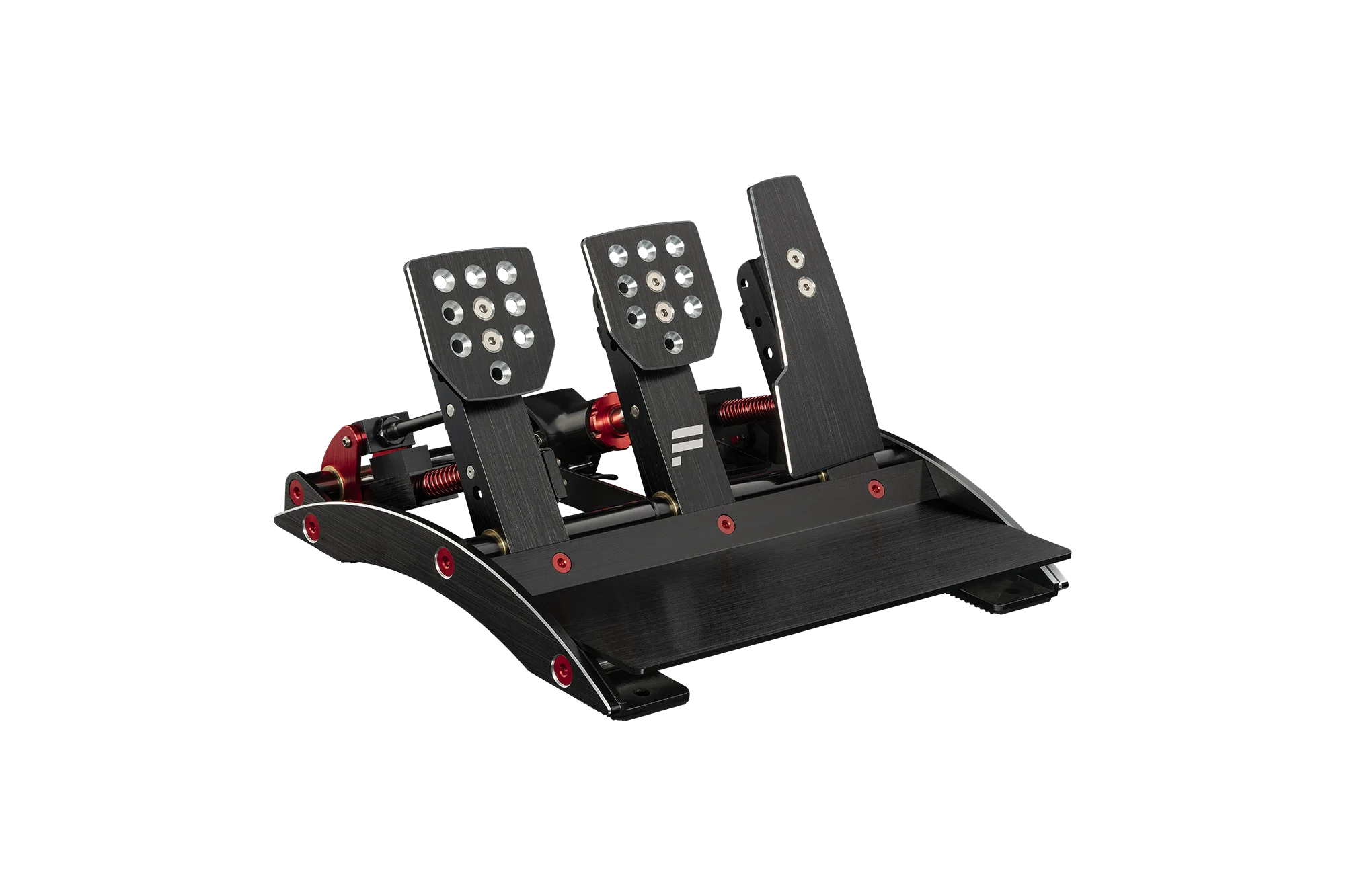
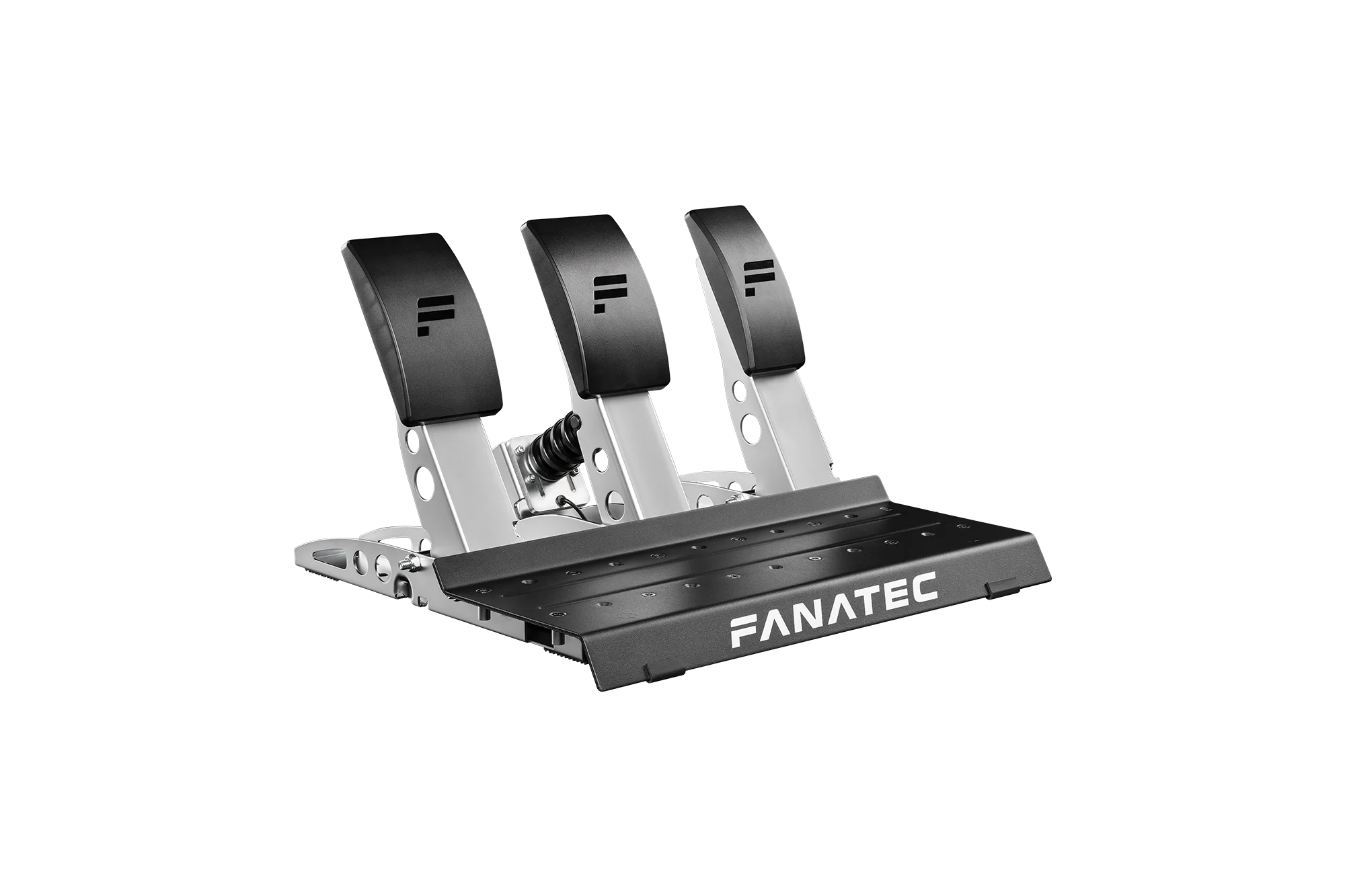
- Fanatec ClubSport Pedals V3: adjustable 90 kg load cell brake.
- Fanatec CSL Pedals LC: maximum force not published by Fanatec.
A high rating does not force you to brake hard. These pedals let you set the force needed to reach full braking. Pick a setting you can repeat without fatigue for an entire race, not one that only works for a single hot lap.
Load cell pedals in our catalogue compared
The table lists the specifications stated by the manufacturers and the prices checked on 6 October 2026 on the official EU stores. You can find every model in our pedals catalogue and in our ranking of the best sim racing pedals.
| Pedals | Pedal count | Stated brake | Stated platforms | Checked price |
|---|---|---|---|---|
| Fanatec CSL Pedals LC | 3 | Load cell, max force not published | PC (consoles via a Fanatec base) | €179.90 |
| Fanatec ClubSport Pedals V3 | 3 | 90 kg load cell | PC (consoles via a Fanatec base) | €329.95 |
| MOZA CRP2 | 2 (clutch sold separately) | 200 kg load cell | PC, Xbox | €399 |
| Simagic P1000 | 3 | 100 kg load cell | Not specified | €558 |
| Heusinkveld Sim Pedals Sprint | 3 | 120 kg sensor, 65 kg real | Not specified (USB) | €652.19 |
| Heusinkveld Sim Pedals Ultimate+ | 3 | 200 kg sensor, 140 kg real | Not specified (USB) | €1,450.79 |
The MOZA CRP2 price is the listed €399, against a crossed-out €449 when we checked. The CRP2 clutch pedal is sold separately for €109, according to MOZA.
Hydraulic brakes and active pedals: the next step up
Beyond the classic load cell, our catalogue includes two other technologies. The Simagic P2000-R pairs a force sensor with a real hydraulic circuit, including a master cylinder and braided lines. Simagic does not publish a euro price on its official store.
The Simucube ActivePedal Pro goes further. A motor generates the pedal resistance, up to 1,100 N (110 kg) according to Simucube. The pedal can reproduce ABS and other effects, and more than 50 parameters can be adjusted in software. It was checked at €1,682.40 for a single pedal.
These options are aimed at drivers who already have a complete setup and are deeply invested. For a first load cell brake, the Fanatec, MOZA and Simagic P1000 models cover what most people need.
Console compatibility: what to check
A USB pedal set works on PC. On console, things are different: the pedals often have to go through the wheel base, which carries the console licence.
The Fanatec CSL Pedals LC and ClubSport Pedals V3 connect via USB to a PC or to a Fanatec base. In the second case, they follow that base's compatibility. MOZA states that the CRP2 works with PC and Xbox. For the other models, no console compatibility is listed in our data.
Our guide to PS5, Xbox and PC wheel compatibility goes through the rules model by model, including the cases where the wheel fitted to the base changes what works.
Desk or cockpit: a firm brake needs a solid base
A load cell brake pushes back against your foot. On a smooth floor, the pedal set slides forward. On a chair with castors, you are the one who rolls back. Either way, the measurement becomes inaccurate and your braking loses consistency.
A cockpit solves the problem by tying the seat and the pedal plate together. Trak Racer states that the pedal plate of its TR8 Pro V2 and its Alpine Racing TRX V2 is reinforced for up to 180 kg of braking force. Our sim racing cockpit buying guide covers the options.
If you are staying on a desk for now, the guide on how to mount a racing wheel on a desk gives practical tips to stop the pedals and the chair from moving.
Figures from official manufacturer spec sheets and market prices checked on 6 October 2026. Not a hands-on test: see our methodology.
Frequently asked questions
Are load cell pedals worth it for a beginner?
Yes, it is one of the upgrades that brings the most consistency to your braking. The Fanatec CSL Pedals LC set, checked at €179.90 on 6 October 2026, is the most affordable option in our catalogue.
What does 200 kg mean on a load cell brake?
It is usually the capacity of the sensor. It does not necessarily match the force you have to apply. Heusinkveld, for example, lists a 200 kg sensor and a real braking force of 140 kg on the Ultimate+.
Do load cell pedals work on PS5?
Only if they can be connected to a PS5-compatible wheel base. Fanatec pedals go through a Fanatec base. No other load cell pedals in our catalogue are stated as directly compatible with PlayStation.
Load cell vs Hall effect pedals: what is the difference?
A Hall effect sensor measures pedal position without contact. A load cell measures the force applied. The first is reliable and durable, the second better reproduces how you modulate a real brake.